In the last few days, the Movement Control Order (MCO) has awoken many to the fact that supply chains that we assume work without question have now become highly critical.The establishment of a special task force to maintain critical supply chains by the current government is an excellent step to ensure that what is currently a medical crisis doesn’t turn into a broader crisis.
Moving forward, and in light of the extended MCO, the battle to ensure that critical supply chains remain functioning will be fought on two fronts — food and medical supplies.Critical medical equipment have become the weapons that frontliners are scrambling to get their hands on to fight the Covid-19 pandemic.
To date, we have stemmed the tide but every day that this crisis continues, the ability to source complex equipment also increases in difficulty.To make informed decisions, a deeper understanding of the medical supply chain is needed to ensure that we don’t miss a step.
Several years ago, the nation moved rapidly towards halal food production. This included increasing capacity in the agriculture and manufacturing sectors mostly driven by small and medium enterprises (SMEs).Now we see the wisdom of that initiative. In this time of crisis, it is paying dividends.
Today, we see the need for “strategic production” which may not be highly profitable but forms the vanguard that will buffer food supply requirements from any delays of international shipments.While we have been able to identify certain gaps, we need to intelligently, strategically and calmly move towards a sustainable future.
I am proposing that all stakeholders work together with the government to develop a “Critical Materials Policy”.Such a policy will assist the government and industry players plan for crises, to meet the needs of the economy and, ultimately, the people during critical times.
In what might seem a long way away, the post Covid-19 world will see a change in the way countries increase their levels of self-sufficiency in critical areas.Money may be able to buy you a lot of things but during a global or regional crisis, it will matter little if you can’t produce the critical items needed to deal with the crisis that has befallen your own nation.
With this in mind, investment planning will need to do more than keep one eye on the components of critical supply chains.The question will be: how will Malaysia be able to attract those investments onshore when companies will be looking to benefit from incentives from home nations to establish production there and how quickly can Malaysia develop domestic capabilities?
There is much work to be done by all. While we continue to heed the advice of the prime minister to stay at home, we still need to think globally about a sustainable future.
NORDIN ABDULLAH
FOUNDING CHAIRMAN, MALAYSIA GLOBAL BUSINESS FORUM
This news appeared on News Straits Times Let’s move towards a ‘critical materials policy’
Services
Stakeholder mapping, analysis, engagement and communication needs to be detailed to avoid business losses or even worse, a crisis. How can you do this effectively to prevent failure? ...
Data-driven business decisions have never been as crucial, especially in this era. MGBF leverages off, technology, experience and market presence to aid businesses in making accurate decisions. ...
MGBF provides comprehensive strategic advice and results-focused solutions to solve clients' problems in business-government relations so they can focus on their core business. ...
A critical business challenge is meeting the right decision-makers and potential buyers through the best channel and platform. How will you improve your business competency? ...
Upcoming Events
MGBF founding chairman Nordin Abdullah and UMW Toyota president Datuk Ravindran K. will delve into the convergence of automotive innovation and environmental sustainability in Penang, Sarawak, Johor and Pahang.
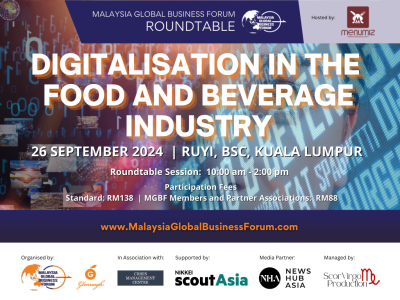
Hosted by menumiz™ – an end-to-end restaurant management system – this roundtable will feature a case study presentation and a panel session to discuss the latest digital trends, challenges, and opportunities within the food and beverage sector.
In this episode of 'A Working Lunch with Nordin', MGBF's founding chairman, Nordin Abdullah, will host this discussion focusing on the biggest threats and opportunities for businesses as we look to manage change in the South China Sea.
This MGBF Roundtable will focus on regional food security issues and trends in the regional supply chain, and trade regulations and policies, including a new geopolitical tool i.e., weaponisation of supply chains.
MGBF In The News
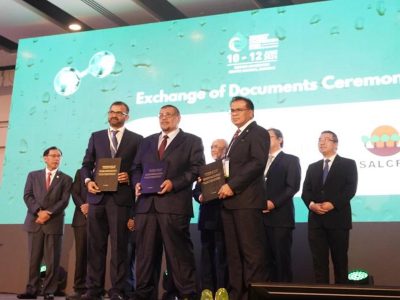
Planet QEOS, KIS BlOCNG San Bhd, and the Sarawak Land Consolidation and Rehabilitation Authority (SALCRA) have officially signed a tripartite memorandum of understanding (MoU) to establish a collaborative framework aimed at producing bio-hydrogen via the Steam Biomethane Reforming (SBMR) Process. The MoU was signed by Planet QEOS executive chairman Dino […]
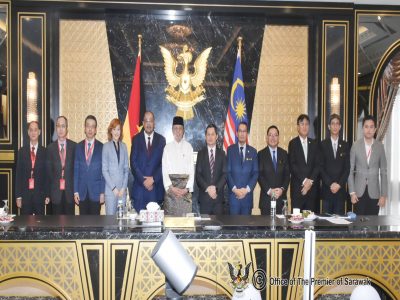
Planet QEOS and China Machinery Engineering Corporation (CMEC) are interested in investing RM10 billion to co-develop advanced Megawatt peak (MWp) agrovoltaic in Baram, to further boost Sarawak’s green energy initiative and food security. Sarawak Premier Datuk Patinggi Tan Sri Abang Johari Tun Openg was briefed on Friday by both the […]
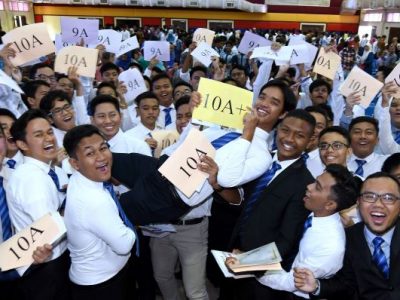
Last week SPM results came out, 373,974 aspirants who have been waiting patiently over the last few months would now know their fate. Some 10,109 have received all A’s, the golden standard of academic success and the ticket to those looking to study the “more advanced” subjects in university. Proudly, […]
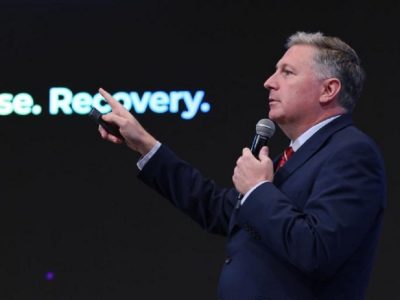
The classic knee-jerk reaction is to say, fire the coach, change the leadership of associations, and reduce the funding till they start performing better. This kind of negative reinforcement may work for kindergarten children, but we are dealing with high-performance adults – individuals much further along in their psychological and […]
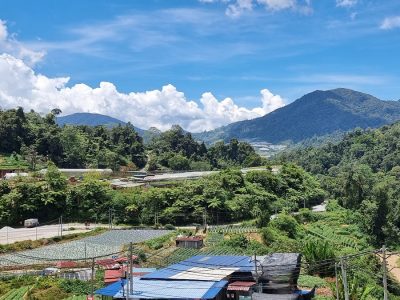
Since its earliest tea plantations in 1929, Cameron Highlands has grown to become a key player in the agricultural landscape of Malaysia, producing 40 per cent of all vegetables grown. Despite Malaysia shifting its economic focus away from agriculture, the industry remains imperative for food security and the livelihoods of […]
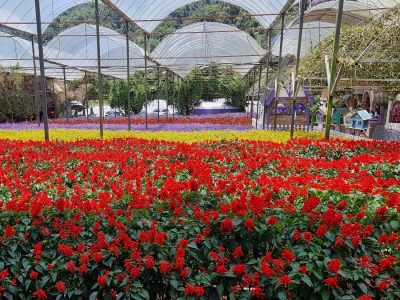
Although at first glance the travel industry and the agricultural sector appear to have nothing in common, they actually share more than meets the eye. The economic benefits of tourism to the agricultural sector can be multiplied several times over. “Tourism brings the end consumers closer to the source, which […]
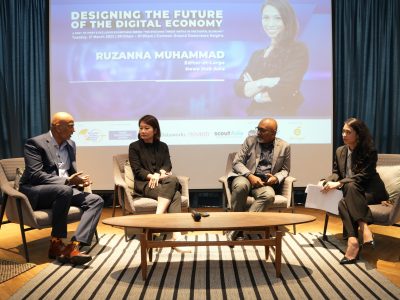
The Malaysia Global Business Forum (MGBF) recently held a high-level roundtable themed ‘Designing the Future of the Digital Economy’, attended by industry leaders and business associations. The guest of honour was Yang Berhormat Syerleena Abdul Rashid, the Member of Parliament (MP) for Bukit Bendera in Penang. The MP’s Special Session […]
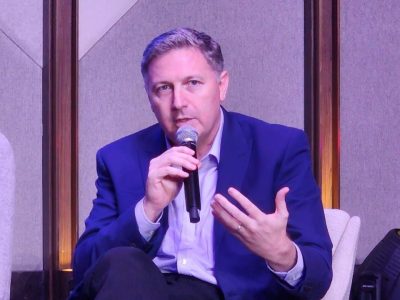
The Malaysia Global Business Forum (MGBF) will be hosting a roundtable on ‘Designing the Future of the Digital Economy’ on 23 February 2023. It is the culmination of the first three MGBF Exclusive Roundtable Series titled ‘The Evolving Threat Matrix in the Digital Economy’ held throughout 2022. According to the […]
The Founding Chairman of the Malaysia Global Business Forum (MGBF), Nordin Abdullah, today spoke on Bernama TV’s leading English talk show, The Brief, hosted by Jessy Chahal, on the topic of a stable political reality and what that means for the Malaysian economy. Nordin said, “The first thing that it […]

More than 1,100 years ago, Muhammad ibn Musa al-Khwarizmi was developing the mathematical formulas that we know today as algorithms which now have become so intertwined with the business fortunes of global media giants and the very fabric of geopolitics. A series of recent high level international reports have revealed […]
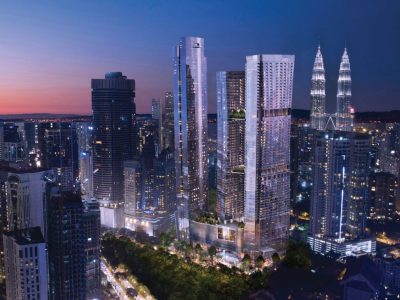
KSK Land has been recognised by the Malaysia Global Business Forum (MGBF) for its role in attracting high net-worth individuals to Malaysia post-pandemic. The first challenge in investor attraction is “selling” the country. In the context of Asia, Malaysia is competing with some very established investment destinations. The second […]
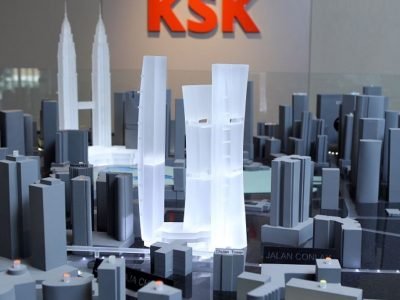
Malaysia, in particular Kuala Lumpur, continues to position itself as a regional centre to do business, educate a family and enjoy a global lifestyle. One company, KSK Land, has taken the lead in positioning itself and the city of Kuala Lumpur as a property investment destination for the global citizen […]
The upcoming budget represents an opportunity to build resilience in the critical sectors that will form the backbone of the country’s future-facing economic ambitions. This however needs to be achieved in the context of managing the community sectors most impacted by COVID-19 over the past two years. The Keluarga Malaysia (Malaysian Family) […]

Malaysia Global Business Forum (MGBF) has moved to support the creative economy as the overall economy moves into a recovery phase following the COVID19 pandemic. As a step in the direction of normalcy, the MGBF has agreed to host the art exhibition “I Know You’re Somewhere So Far” by one […]
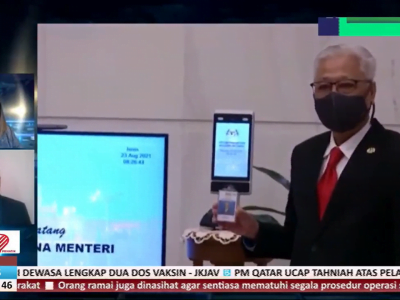
Congratulations to Datuk Seri Ismail Sabri Yaakob for taking up the mantle of the ninth prime minister of Malaysia. There is nothing normal about the situation; it could not have been scripted but it has kept the spectrum of media, mainstream and social, gripped. The first order of business for […]
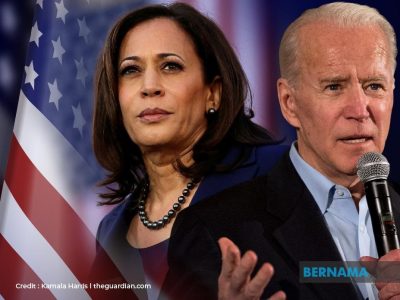
In a stirring speech to the nation, President Joseph R. Biden, Jr. stamped his brand of leadership on the presidency, in his first act as the 46th president of the United State of America, it signaled several shifts. Perhaps the weather was foreboding with snow falling before the ceremony that […]
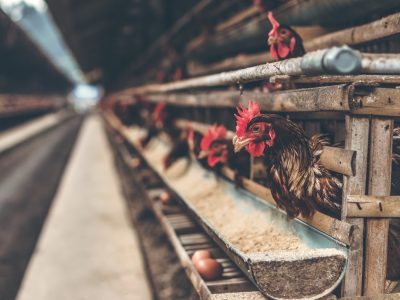
KUALA LUMPUR, 6 July 2022 – As the global economy continues to deal with unprecedented levels of disruption caused by the pandemic and the conflict between Russia and Ukraine, the convergence of energy security and food security issues has become a front-of-mind issue faced by policy makers and consumers alike. […]

KUALA LUMPUR, 23 June 2022 — Malaysia Global Business Forum (MGBF) ties up with scoutAsia to ensure that businesses are equipped with deeper regional insights. The past two years has seen a massive shift in the way businesses are conducted with digitisation, digitalisation and automation continuously being adopted to improve […]
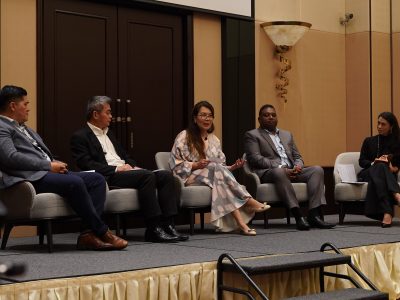
KUALA LUMPUR, 25 May 2022 – The Malaysia Global Business Forum (MGBF)’s exclusive roundtable on ‘Security Concerns in Critical Value Chains’ was held in a hybrid setting yesterday at the Eastin Hotel Kuala Lumpur. The guest of honour was Yang Berbahagia Tan Sri Dato’ Seri Rafidah Aziz, former minister of […]