
This Whitepaper was released together with following partners, under the umbrella of the Fair Tech Institute:
- CANLA: The Climate Action Network Latin America (CANLA), is a regional network of non-governmental organizations committed to fighting the causes and harmful effects of climate change.
- AlphaBeta: AB provides strategic advice that leads to new, innovative, and practical solutions addressing issues ranging from automation of jobs, biodiversity loss to poverty alleviation.
- TSFI: Télécoms Sans Frontières (TSF) is the world’s first NGO focusing on emergency-response technologies.
- GSOA: The pre-eminent platform for collaboration between satellite operators globally, providing a unified voice for the sector.
As the Intergovernmental Panel on Climate Change (IPCC) showed in its latest report, released in August 2021, the immediate effects of global climate change are widespread, rapid and accelerating.
This Whitepaper focuses on the undeniably necessary call to action:
Call to Action for Governments and Stakeholders:
- Providing clear strategies to minimise damages.
- Increasing speed of response in critical times.
- Regulating for future technologies that may assist rapid rescue.
- Multiplying resources by partnering with the private sector.
For more information on the Whitepaper and best practice for effective policy planning, download the “The Role of Satellite Communications in Disaster Management“.
As natural disasters increase yearly, satellite networks will help save millions of lives
As the Intergovernmental Panel on Climate Change (IPCC) showed in its latest report, released in August 2021, the immediate effects of global climate change are widespread, rapid and accelerating. For cities in temperate latitudes, this means more heat waves and shorter cold seasons. In subtropical and tropical latitudes, it means wetter rainy seasons and hotter dry seasons. Most coastal cities will be threatened by sea level rise. Although most types of weather-related disasters are likely to become more common across all regions, global heating above 1.5C will be “catastrophic” for island nations and could lead to the loss of entire countries due to sea level rise within the century.
Providing unique data, Access Partnership’s newly published paper “The Role of Satellite Communications in Disaster Management” shows that the impact of natural disasters will be concentrated among low- and middle-income countries, which are relatively less prepared to adapt. The paper shows that natural disasters currently cost the agricultural sector of these economies more than USD 108 billion in damaged crop and livestock production. Should the level of financing in climate adaptability remain low, the United Nations Environment Programme (UNEP) estimates that climate change adaptation and natural disaster damages would cost developing countries a range of USD 280 to USD 500 billion per year by 2050, a figure four to five times higher than previous estimates.

To reduce the socioeconomic impact of climate-related disasters, governments are encouraged to increase investment in physical and social infrastructure and allow for the upscaling and acceleration of far-reaching, transformational adaptation strategies. This includes the effective use of satellite networks and next-generation satellite technology.
One of such strategies include the development of emergency telecommunication plans (NETPs) given the crucial role telecoms can play in saving lives and protecting communities when disasters strike. As shown by this study, we need a concerted effort to fix the underlying inefficiencies of our current, existing communication systems. The paper highlights that the availability of communication networks directly related to the ability of responding quickly to emergencies. They are imperative to ensure efficient and accurate information flows during and post disaster management. Many studies have been conducted over the past decade to understand the impact of reducing emergency response times on health and economic outcomes during natural disasters. A reduction in response times during natural disasters has a significant impact on mortality, morbidity, and property damage costs.
Considering the pressing need to ensure communications systems remain operational during inevitably difficult situations such as natural disasters, satellite services and next-generation satellite-enabled connectivity can help addressing the limitations faced by our present terrestrial telecommunication network. The adoption of new strategies and technological solutions – as a crucial component of disaster preparedness – would allow the less connected to communicate during emergency situations, ensuring that emergency communications are more accessible for better rescue responses.
The whitepaper sheds light on the different economic outcomes resulting from increased natural disasters occurring at a global scale. The study shows that though most types of weather-related disasters are likely to affect countries of all income groups, the economic burden in low-income countries is disproportionate. With less resources, know how, policies in place, investment on infrastructure, equipment and in training, low-income jurisdictions are particularly vulnerable to the consequences of climate change. For instance, breaking down by regions, Asia Pacific is expected to incur the greatest economic damage at USD 165 billion from 2025-29, or 42% of the total.
Considering their unpreparedness to bear the financial costs and the need to protect human lives, collaborative efforts between governments and the private sector are urgently needed to maintain adequate NETPs.
The document calls for greater stakeholders’ coordination to ensure a robust, effective and harmonized communication plan and strategy to face the increasing number of natural disasters that are likely to impact our countries. The initiative focuses on requesting Government to be more innovative, allowing the introduction of effective and inclusive emergency satellite-based communications services for its adequacy during and post-disasters relief efforts.
By ensuring an enabling regulatory environment that allows for the roll-out of new satellite-based emergency communications solutions, governments can save lives and protect communities.
The issuer is solely responsible for the content of this announcement.

Services

STAKEHOLDER ENGAGEMENT
Stakeholder mapping, analysis, engagement and communication needs to be detailed to avoid business losses or even worse, a crisis. How can you do this effectively to prevent failure? ...

BUSINESS INTELLIGENCE
Data-driven business decisions have never been as crucial, especially in this era. MGBF leverages off, technology, experience and market presence to aid businesses in making accurate decisions. ...

GOVERNMENT RELATIONS
MGBF provides comprehensive strategic advice and results-focused solutions to solve clients' problems in business-government relations so they can focus on their core business. ...
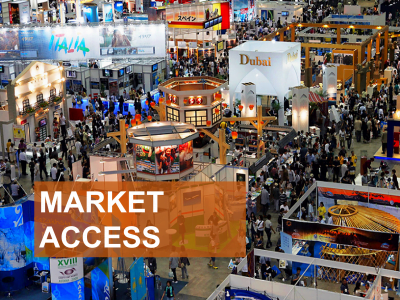
BUSINESS & BROADER MARKET ACCESS
A critical business challenge is meeting the right decision-makers and potential buyers through the best channel and platform. How will you improve your business competency? ...
Upcoming Events

‘A WORKING LUNCH WITH NORDIN’: NATIONWIDE TOUR WITH TOYOTA
MGBF founding chairman Nordin Abdullah and UMW Toyota president Datuk Ravindran K. will delve into the convergence of automotive innovation and environmental sustainability in Penang, Sarawak, Johor and Pahang.
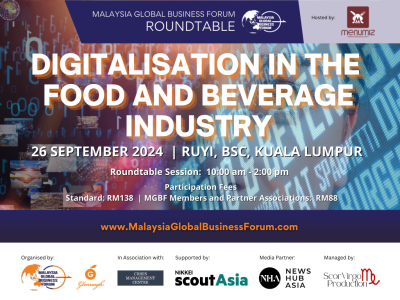
MGBF Roundtable: Digitalisation of the Food and Beverage Industry
Hosted by menumiz™ – an end-to-end restaurant management system – this roundtable will feature a case study presentation and a panel session to discuss the latest digital trends, challenges, and opportunities within the food and beverage sector.

THE SOUTH CHINA SEA: A THREAT OF DISRUPTION FOR BUSINESS?
In this episode of 'A Working Lunch with Nordin', MGBF's founding chairman, Nordin Abdullah, will host this discussion focusing on the biggest threats and opportunities for businesses as we look to manage change in the South China Sea.

FOOD SECURITY IN THE BREACH: INDUSTRIALISATION AND WEAPONISATION
This MGBF Roundtable will focus on regional food security issues and trends in the regional supply chain, and trade regulations and policies, including a new geopolitical tool i.e., weaponisation of supply chains.
MGBF In The News

News provided by Emjay Communications Malaysia and China commemorated a historic milestone of 50 years of diplomatic relations with a grand celebration at Sunway Velocity Mall on the 10th of August 2024. The event, themed “Hi China: Discovering China Opportunities and Celebrating 50 Years of China-Malaysia Relationship,” aimed to deepen […]
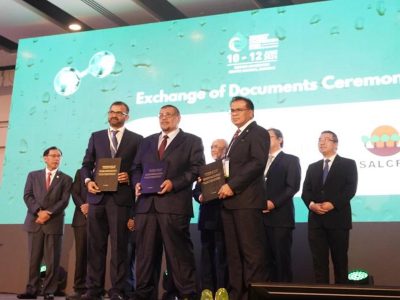
Planet QEOS, KIS BlOCNG San Bhd, and the Sarawak Land Consolidation and Rehabilitation Authority (SALCRA) have officially signed a tripartite memorandum of understanding (MoU) to establish a collaborative framework aimed at producing bio-hydrogen via the Steam Biomethane Reforming (SBMR) Process. The MoU was signed by Planet QEOS executive chairman Dino […]
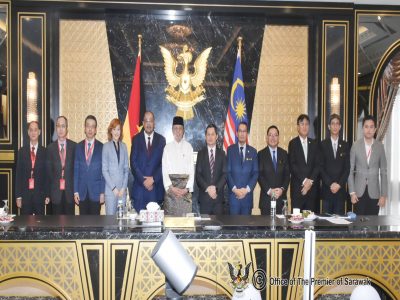
Planet QEOS and China Machinery Engineering Corporation (CMEC) are interested in investing RM10 billion to co-develop advanced Megawatt peak (MWp) agrovoltaic in Baram, to further boost Sarawak’s green energy initiative and food security. Sarawak Premier Datuk Patinggi Tan Sri Abang Johari Tun Openg was briefed on Friday by both the […]

Last week SPM results came out, 373,974 aspirants who have been waiting patiently over the last few months would now know their fate. Some 10,109 have received all A’s, the golden standard of academic success and the ticket to those looking to study the “more advanced” subjects in university. Proudly, […]
The classic knee-jerk reaction is to say, fire the coach, change the leadership of associations, and reduce the funding till they start performing better. This kind of negative reinforcement may work for kindergarten children, but we are dealing with high-performance adults – individuals much further along in their psychological and […]
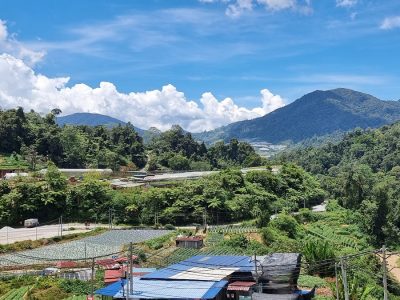
Since its earliest tea plantations in 1929, Cameron Highlands has grown to become a key player in the agricultural landscape of Malaysia, producing 40 per cent of all vegetables grown. Despite Malaysia shifting its economic focus away from agriculture, the industry remains imperative for food security and the livelihoods of […]
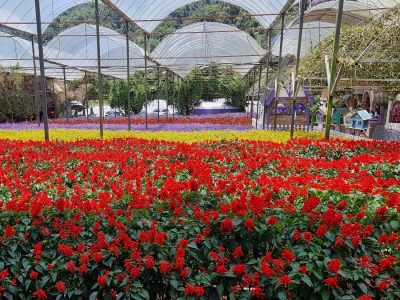
Although at first glance the travel industry and the agricultural sector appear to have nothing in common, they actually share more than meets the eye. The economic benefits of tourism to the agricultural sector can be multiplied several times over. “Tourism brings the end consumers closer to the source, which […]
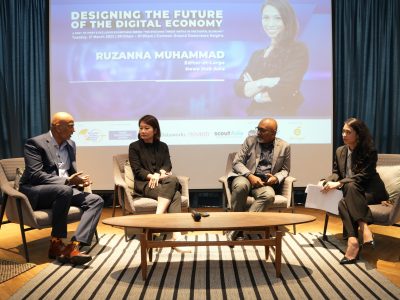
The Malaysia Global Business Forum (MGBF) recently held a high-level roundtable themed ‘Designing the Future of the Digital Economy’, attended by industry leaders and business associations. The guest of honour was Yang Berhormat Syerleena Abdul Rashid, the Member of Parliament (MP) for Bukit Bendera in Penang. The MP’s Special Session […]

The Malaysia Global Business Forum (MGBF) will be hosting a roundtable on ‘Designing the Future of the Digital Economy’ on 23 February 2023. It is the culmination of the first three MGBF Exclusive Roundtable Series titled ‘The Evolving Threat Matrix in the Digital Economy’ held throughout 2022. According to the […]
The Founding Chairman of the Malaysia Global Business Forum (MGBF), Nordin Abdullah, today spoke on Bernama TV’s leading English talk show, The Brief, hosted by Jessy Chahal, on the topic of a stable political reality and what that means for the Malaysian economy. Nordin said, “The first thing that it […]

More than 1,100 years ago, Muhammad ibn Musa al-Khwarizmi was developing the mathematical formulas that we know today as algorithms which now have become so intertwined with the business fortunes of global media giants and the very fabric of geopolitics. A series of recent high level international reports have revealed […]

KSK Land has been recognised by the Malaysia Global Business Forum (MGBF) for its role in attracting high net-worth individuals to Malaysia post-pandemic. The first challenge in investor attraction is “selling” the country. In the context of Asia, Malaysia is competing with some very established investment destinations. The second […]
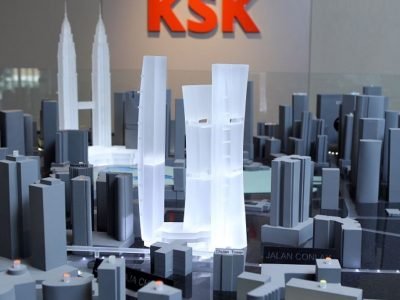
Malaysia, in particular Kuala Lumpur, continues to position itself as a regional centre to do business, educate a family and enjoy a global lifestyle. One company, KSK Land, has taken the lead in positioning itself and the city of Kuala Lumpur as a property investment destination for the global citizen […]
The upcoming budget represents an opportunity to build resilience in the critical sectors that will form the backbone of the country’s future-facing economic ambitions. This however needs to be achieved in the context of managing the community sectors most impacted by COVID-19 over the past two years. The Keluarga Malaysia (Malaysian Family) […]



KUALA LUMPUR, 6 July 2022 – As the global economy continues to deal with unprecedented levels of disruption caused by the pandemic and the conflict between Russia and Ukraine, the convergence of energy security and food security issues has become a front-of-mind issue faced by policy makers and consumers alike. […]

KUALA LUMPUR, 23 June 2022 — Malaysia Global Business Forum (MGBF) ties up with scoutAsia to ensure that businesses are equipped with deeper regional insights. The past two years has seen a massive shift in the way businesses are conducted with digitisation, digitalisation and automation continuously being adopted to improve […]
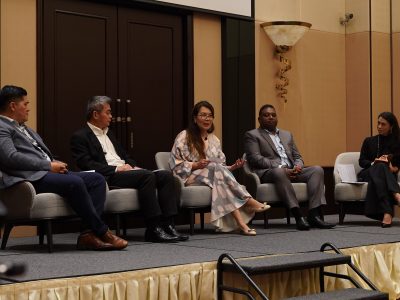
KUALA LUMPUR, 25 May 2022 – The Malaysia Global Business Forum (MGBF)’s exclusive roundtable on ‘Security Concerns in Critical Value Chains’ was held in a hybrid setting yesterday at the Eastin Hotel Kuala Lumpur. The guest of honour was Yang Berbahagia Tan Sri Dato’ Seri Rafidah Aziz, former minister of […]